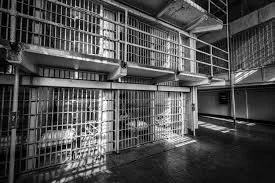
The air in Jamar Phillips’ cell hung thick as old soup—buzzing with heat, stinking of rusted blood, mold, and sweat-slicked fear.
The AC above him rattled uselessly, a dying breath trying and failing to hold back the heat. It was the same air he’d tasted the day they dragged him off the transport bus—shackled, sweating, already forgotten.
That morning, the cell block pulsed with the sounds of life and death: the clink of cuffs brushing steel, chains whispering along concrete, and men murmuring to themselves like broken radios trying to remember how to speak. Heat clung to the prison walls like a second skin, turning each breath into a dry, choking rasp. Even the shadows felt heavier. Time had thickened here, slow and angry, pressing down on Jamar’s chest like a curse he couldn’t shake.
He rolled his shoulders, feeling the quiet rebellion of tired muscles too long confined. The dull ache was comforting in its consistency. Far off, a mechanical screech rang out—the sound of a gate groaning open—piercing the silence like a scream in church. It was a sound that once meant hope, or change. Now, it was just a reminder: there were places he’d never walk again.
But something else lingered in the air today, something new. It was subtle, like static before a lightning strike, or the way animals fall silent before an earthquake. Jamar felt it deep in his gut—a vibration, a warning. Something was coming.
He tried to chase it away with ritual. He closed his eyes and summoned the memory, the way he had every day for the past 1,000 days. He could see the concrete fortress looming like a tombstone when he first stepped off the repurposed school bus. The heat had risen in waves off the asphalt, blending with the stink of hot piss, diesel fumes, and the sour breath of the man shackled in front of him. He flinched away from the music of the metal at his ankles. The driver, face bloated and blotchy from too many Marlboros and too little joy, had hurled spittle-laced insults as Jamar descended, already branded a monster. The guards sang along—dead man walking, dead man walking—their voices soaked in mockery.
He remembered the way the metal bit at his ankles and wrists, the way his mind sharpened around the pain like a camera lens pulling into focus. But today, something interrupted the loop. Today, his memory faltered—not in clarity, but in priority. He wasn’t focused on the sights or sounds.
Today, all he could register was taste.
The air tasted wrong. Tangy. Like blood and ozone. Sweet, but not the kind of sweet that comforted—it was the rotting sweetness of something past its expiration. Jamar wasn’t a man prone to fear, not after all he’d seen. But the nausea coiling in his stomach now—it wasn’t the past. It was now.
Still, he forced the emotion away, clamping down on it like a bad tooth. He had work to do. For three long years, he’d plotted. Memorized guard rotations, timed shift changes, studied blind spots in ancient security systems. He had memorized every route, every grate, every crack in the plaster. He had turned this cage into a blueprint. He was rewarded for this obsession for he knew, before he even opened his eyes, that he had figured it out. He could feel the years worth of planning and patience falling into place like tetris blocks. And as his tired eyes opened, staring unseeing at the ceiling, he had one thought on his mind. I will leave this hell today.
Jamar sat up slowly, feeling the thin mattress groan beneath him. The metal bars in front of him shimmered faintly in the heat, warping the view of the hall beyond. Oddly quiet. The usual morning rituals—gripes, catcalls, toilet flushes, barks from guards—were muted, muffled like someone had put the whole prison underwater. Something felt off.
This was Death Row, but even here there was noise, chaos, life. The POs had taken to calling it “Death Show” for the nightly fights, the stabbing spectacles, the screams in the dark that never earned a second glance. But now? It was silent.
Jamar shoved the feeling down. He had places to be. First stop: the laundry drop. He wasn’t leaving without seeing The Doc.
No one knew the man’s real name. He wasn’t a doctor—not in any legal sense—but he had more influence than half the guards. If you needed stitches, methadone, a Bible, or a blade, Doc had it. He ran the laundry room like a general in exile—quiet power, total control. As he sauntered down the hall and took the stairs down to the main work floor, Jamar wondered how a man could earn that type of respect. Jamar moved fast. He needed to trade what little he had—cigarettes, a bent spoon, a smuggled pen—for a med kit and a pair of gloves. No time to linger. The next shift would be coming soon.
But just as he reached the laundry room door, the prison erupted.
A wail exploded over the loudspeakers, shrill and furious. His blood ran cold. A voice crackled through the overhead speakers, tight with urgency:
“LOCKDOWN. IMMEDIATE QUARANTINE IN EFFECT. REMAIN IN YOUR CELLS. DO NOT ATTEMPT TO LEAVE.”
Jamar froze. His hand hovered inches from the doorknob, slick with sweat. This… this wasn’t part of the plan. Shouts erupted up and down the hall, confused voices stacking over each other in panic. Men rattled their cells, demanding answers. But the guards didn’t respond.
And then—he saw him. A figure, still as a gravestone, standing near the far end of the block. One of the guards. Jamar squinted. Something was wrong. The man’s hands trembled at his sides like they belonged to someone else. His breath came in heaving gasps, and then—he dropped, collapsing in a limp heap.
The man jerked once—twice—then began to move. But not like someone waking up. More like a puppet tangled in its own strings. And then came the sound. A groan, wet and ravenous, clawing its way up from somewhere deep and wrong. Jamar felt it in his bones before he heard it. The guard flailed to his feet, eyes milky, jaw slack. And then—with terrifying speed—he lunged.
The nearest prisoner didn’t even scream. Not really. Just a high-pitched choke before the man’s throat was torn open. Chaos exploded. Men screamed, some backing into corners, others howling at the bars. The dead guard feasted like a starving dog. And behind him, others began to fall. Guards. Inmates. Dropping, convulsing. Rising again. Twisted. Wrong. Hungry.
Blood painted the walls. Limbs jerked like marionettes on frayed strings. The air filled with the awful sounds of tearing flesh and the wet cough of death being rewound. Jamar’s mind slammed into survival mode. This was not the escape he planned. But it was still his chance.
He had spent years mapping a way out of a fortress built to erase him. He hadn’t planned for this—whatever this was—but planning be damned. He would adapt. He would survive.
Because if death could walk free from this place…so could he.
※※※※※※※
